
“An incredible film with a lot of heart, full of inspiring talent and fresh portrayals of characters nearly two centuries old”
The only knowledge I had of Little Women, the classic Louisa May Alcott novel, was a vague knowledge of the title and that it was referenced once in The Simpsons. I didn’t grow up reading classics, and I feel like I belong in the collective minority of people entirely unacquainted with the original source material, or the many film adaptations that have come before this.
However, what I am familiar with, and even moreso now after diving into every long interview I can find, is the immense talent on display in this film, both in front of the camera and behind it. I had little doubt that I would find a lot to love in this film, and I was definitely not disappointed.
I loved this film, more than I was willing to admit immediately after, and my love for it has been bolstered by the unashamedly vast amount of time I’ve now spent watching Greta Gerwig talk passionately about every little detail inside her beautiful adaptation.
Her warm, intimate directorial style fits perfectly with the classic tale of sisterhood, and her deliberate narrative choices, such as the restructuring of the film into a perfectly edited back-and-forth between childhood and adulthood, enhances the coming-of-age elements drastically.
Not only does she play with narrative choices so effortlessly, imbuing each nostalgia-tinted flashback with a natural emotional connection to its present counterpart, but she gives a kaleidoscopic view of the story’s layers. The film isn’t just split between adulthood and childhood, but also contains a third, meta layer about the life of Alcott herself. It’s well known that Jo March is based heavily on Alcott, but in Gerwig’s meticulous script, this is taken even further, and Alcott is given her own narrative highlighting the divergence of her life and Jo’s.
The film is everything at once and more. A coming-of-age story, a romance, an authentic period piece and a contemporary commentary on the economic value of female creativity. The third narrative layer Gerwig introduces, combined with her attentive, detailed filmmaking, helps catapult the film from great to amazing,
So far, I’ve only been heaping praise onto the writer and director herself, but I’m sure everyone can agree that a great script also requires great actors, and this film has plenty. Every performance is noteworthy, nuanced and full of humanity and warmth. Jo March, as portrayed by Saoirse Ronan, is given a touch more vulnerability than previous portrayals. Instead of this working against the character’s status as a strong, feminist role model, it adds to the realism of her depiction and allows Ronan to work wonderfully with the script in creating a modern, layered character with lines that can resonate with every viewer.
The chemistry between Ronan’s Jo and Timothée Chalamet’s Laurie is delightful, it left me clamouring for more scenes between the two, which ultimately fits in perfectly with their combined story. Chalamet also portrays Laurie compellingly, bouncing between his buoyant scenes with Jo in childhood, to his jaded and sarcastic interactions with Amy (Florence Pugh) in Paris. The relationships between all three are multifaceted but believable, and although you can’t help but root for Jo and Laurie due to their chemistry, the camera often drifts towards Amy, and the quiet moments between her and Laurie make it feel like she is more to him than just a second choice.
I could, in fact, dedicate a paragraph to every performance, as each character is so well-played. Every one of the girls has an expertly crafted journey from childhood to adulthood. Pugh (the relative newcomer) develops her character from overdramatic and chaotic to mature, balanced and self-critical, reflecting on her place in society as a female artist in a similar, but noticeably contrasting way to Jo. Emma Watson’s Meg further adds to the modern commentary by gently chastising Jo for criticising her wish to be married, refining the feminist thought that resonates throughout the film. Even the smaller parts, such as Meryl Streep’s Aunt March and Chris Cooper’s Mr Laurence each have formative, poignant moments that add even more to the emotion of the film.
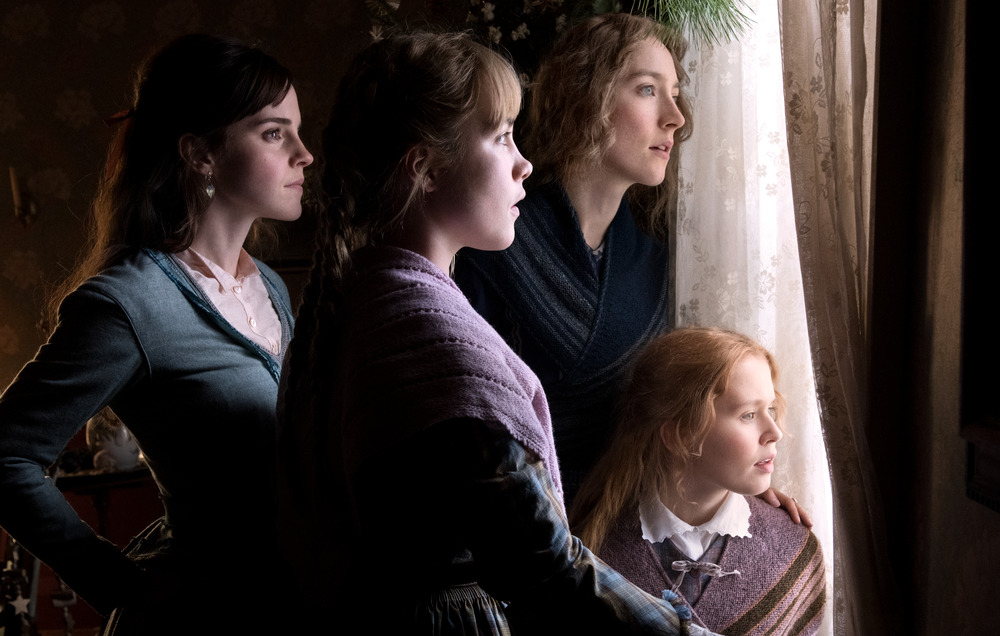
If I haven’t gotten it across by now, this is an incredible film with a lot of heart, full of inspiring talent and fresh portrayals of characters nearly two centuries old. Each scene is packed with charm and full of small details for film-lovers to spot. The highlights, for me, were the scenes with all the sisters together. The incorporation of Alcott’s original dialogue into the choreographed chaos of the quartet of sisters bustling in and out of each scene filled the film with a unique personality and truly sold the love between the March family.
This film made me the happiest out of any I’ve seen so far this year, or even last year. It really is just a wonderful, light-footed film that daintily drifted through my senses like the smell of fresh bread. On the surface, it seems almost simple, but in fact the talent on show just makes it all look effortless. I have no doubt that I’ll see it again, and I look eagerly towards the horizon for anything Greta Gerwig puts her talents to in future.
 Film Class Heroes